Answer: First, in my book What the Hell is Hell? I showed what is written in the Bible. That said, I didn’t say there is no hell, I said that there is no hell as we have come to commonly understand it…as we have been commonly understanding it for roughly 1800 years.
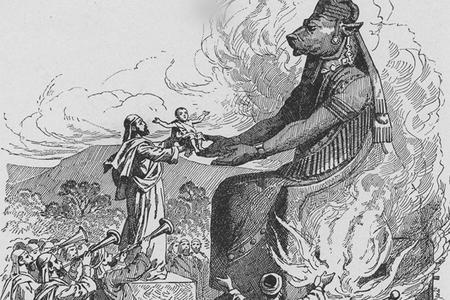
“Hell” is an English translation of the Greek word Gehenna. Gehenna is the name of a real place—a valley just outside Jerusalem, which all Jews (Jesus and the disciples included) were well aware of as a reference to it being the most abominable, desecrated place where worshippers of the pagan god Molech would practice child sacrifice by fire. We know this because it is mentioned or alluded to twenty-two times in the Old Testament.
Gehenna
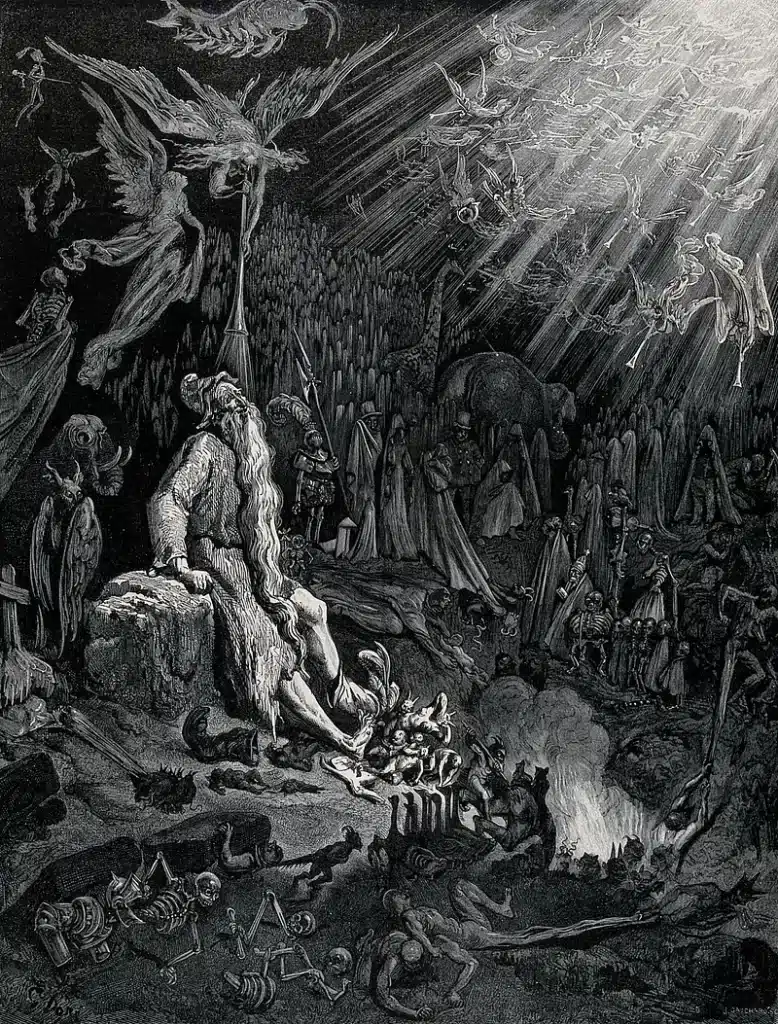
The Old Testament tells us that God has cursed the place and in fact that will be the site where the wicked will be tossed on Judgment Day. See Jeremiah 7:31–34. Isaiah 66:24 also mentions the place and says it will be the site of unquenchable fire, where the worms will never die. In other words, when the wicked are punished, there will be so many bodies that the fire will never run out of fuel and the worms will never run out of food.
This is critically important for Christians because Jesus quotes those exact words in the Gospel of Mark. See Mark 9:47–48. What’s important to understand is that for Jesus, as he tells us in Mark and Matthew (Paul also tells us), the end of the world is soon to come. The Apocalypse is near and that is why he tells people to repent. For Jesus, there was to be an earthly kingdom of heaven on earth. Gehenna also would be on earth, right on the outskirts of the kingdom.
So as far as “hell” is concerned, according to Jesus in the Gospel of Matthew, Mark, and Luke (hell is not mentioned in John) it is a place the wicked go on Judgment Day, not when we die a natural death. So in that sense, yes, I am saying there is no hell as we understand it. All the scriptural support of what I say here is found in my chapter 5.
When the Apocalypse never happened, and the end never came, a major shift in Christian belief occurred. Beginning with Church Fathers in the second century, The concepts of final judgment were transformed not to be an earthly affair happening at the end of the world, but rather to refer to an afterlife heaven, up there, and an afterlife hell, down there. You go to one or the other. And that is the understanding we have held onto to this day. Did Jesus believe in hell? Not our hell, if you go by scripture.
It is one of the great ironies that 2000-3200 years ago, roughly the span that the books in the Old and New Testaments were written, they wrote in language rich
It is one of the great ironies that 2000-3200 years ago, roughly the span that the books in the Old and New Testaments were written, they wrote in language rich with metaphors, symbols, and sublime poetic expression where the meaning was found anywhere but the literal words themselves, but now, these thousands of years later, it is common for religious people, whose religion is based on those texts, to take all the language literally.
Oftentimes this comes as result of the belief that God wrote every word of the Bible. It’s believed that if God is the author, surely he literally meant everything he said. Does God speak in poetry? If you believe God wrote the Bible, would it be so hard to imagine “he” spoke poetically? Who invented poetry? Poetry can often communicate ideas too sublime for literal terms. Even if one believes God is responsible for the writing of the Bible and its content, one would still have to concede that human beings physically wrote the words on the page (and of course then translated it from language to language). Let’s settle for the moment on saying the writers were inspired.
Wrapped up in all this, it must be acknowledged that fear can really impede the search for truth and understanding when it comes to interpreting the language in the Bible. The fear of hell is so palpable, for many, that alone prevents the subject of hell from being examined. When we look at Jesus’ words that have been for ages used to justify the belief in hell, we see a language that speaks about one being thrown into hell, or the fires of hell, or just into fire for being a sinner. Let’s look at that.
The Gospel of Matthew is where we find the most graphic imagery related to fires and hell. For example, “At harvest time I will tell the reapers, “Collect the weeds first and bind them in bundles to be burned, but gather the wheat into my barn” Matthew 13:30. Even those who take the Bible literally tend to concede that the weeds are not literal, nor is tying them in bundles, nor is the wheat or the barn literal…but the fire, of course that’s the literal fire of hell. What’s important to note here is that Jesus gives an explanation of these verse shortly thereafter. He himself tells us these things are metaphorical.
The good seed (that grows into the wheat) are the “children of the kingdom.” The weeds are the “children of the evil one.” That, by definition, shows us that he was not speaking literally. But even more worth noting, he says, “Just as the weeds are collected and burned up with fire, so it will be at the end of the age” (Matthew 13:40). He speaks about the day of judgment at the end of the world as we know it —the end of the age, he is not talking about an afterlife hell. In fact, Jesus never talks about an afterlife hell in any of the Gospels, only this final judgment of humanity.
Later in Matthew, Jesus says that evildoers will be thrown into a furnace of fire. Is that meant to be taken literally? If it is a furnace, how can it also be hell? And how can one furnace handle all the evildoers of humanity? That would have to be one giant furnace! None of this is a problem unless you want to insist things are meant to be taken literally. He speaks in another place about an eternal fire. In Revelation we see talk of a lake of fire. Now here’s the kicker: three times in Matthew he says that sinners will be thrown into “the outer darkness.” Here is a question too seldom asked by those who want to take the Bible literally: If evildoers or sinners are thrown into fire, how can it be dark there? How can you be in darkness and the light of fire at the same time? The answer is you can’t. Jesus is speaking metaphorically. When we look with metaphorical eyes for the deeper meanings, it can all make sense and be in harmony.
I thought today I would write about what a pleasure it is to have deeply delving conversations into biblical scholarship with Dr. Bart Ehrman, such as the one that is
I thought today I would write about what a pleasure it is to have deeply delving conversations into biblical scholarship with Dr. Bart Ehrman, such as the one that is coming out on YouTube this week of January 27, 2025. Bart has been a teacher of mine for over 20 years; meaning I have read just about all of his books, and watched all of his public debates and lectures.
There are many scholars I have studied over the decades. I simply find Bart to be the most lucid, articulate, objective, and vastly knowledgeable scholar out there. Although I am sure there are many scholars who simply haven’t crossed over into the public domain that I am unaware of. It’s also quite fascinating to me that Bart is an atheist/agnostic, as his whole life has been dedicated primarily to scholarship of the New Testament. He once publicly gave a great explanation of that: “When it comes to whether I believe there is a God, I am an atheist. When it comes to whether I know there is a God or not, I am an agnostic.”
For anyone who has watched Bart’s debates over the years, mostly with Christian scholars, I find that Bart comes in with a great advantage because he is an atheist; I have found it tends to make him far more objective about all things related to biblical scholarship. Whereas conversely, the devout believer scholar often has a disadvantage because they tend to not be objective; their beliefs get in the way. Often times in those debates the devout Christian scholar is setting out to do the impossible: prove a belief that can’t be proved. For example, trying to prove as historical fact that the Resurrection happened.
For me this is a debate that is over before it starts. You can try to build and present a case for the Resurrection. You could even say: here is my case that the Resurrection can be proven historically. What you can’t say is: here is my case that proves the Resurrection happened. It doesn’t matter what is recorded for “witnesses,” it doesn’t matter that, as a matter of fact, Christianity would not be here today if so many people hadn’t believed in the Resurrection, it doesn’t matter what ever bits of history can be piled on to indicate the Resurrection happened. The plain truth is that no one can prove a miracle happened 2,000 years ago. If only we could have the bravery to admit that and relegate our beliefs to beliefs. It seems only a need of the ego to declare that what is and can only be a belief is not a belief but a fact.
One step further, I believe in “God.” But as I say in my book: “God is a vocabulary word.” I certainly don’t believe in the Zeus-like old man sitting on a throne in heaven, or a Judge ready to send us to heaven or hell, or any of the age-old conventions. One of my beliefs is: It would be a truly insane God to require any of us to believe in that which can never be proven. Many of the core beliefs of Christianity for example, to me, can be likened to thinking we will saved or condemned based on whether we believe that Jesus walked on water. Did it happen? I don’t know; neither does anyone else. It would be as wrong to say it definitely didn’t happen as to say it definitely did. In my opinion, everyone is entitled to believe whatever they like. If only we could refrain from going that next step to declare: everything I believe is true—is fact, and you who disagree are therefore wrong.
If only we could get beyond such thinking, a peaceful world is waiting.
Beyond the opinions about the debates stated above, I also am often impressed that Bart is always respectful of other people’s beliefs. I have never seen him aloof or arrogant based on someone holding beliefs that he does not or cannot believe in based on the evidence alone. He brings the truth to the table, that is all. On a funnier note, for those of you who also have followed Bart over the years, you know his background: in his youth he was a born-again evangelical, he went to Moody Bible School, Princeton Theological Seminary, and was on his way to becoming a preacher. What a preacher he would have made! When he gets riled up in a debate and asks his very pointed questions for the opposing scholar to address or prove, or when he calls them out on fallacies in their arguments, he can speak with the thundering cadences of a preacher on the pulpit. I have often thought of him as a preacher of truth.
While he might not like at all that I would say this, in my mind God appreciates Bart more than most of the holy men I’ve ever been aware of. For God is truth. So Bart is inadvertently singing God’s praises every day.
According to the latest Pew Research poll in November 2021, 62% of Americans believe in a literal afterlife hell “where people experience physical suffering,” and are forever separated from God.
According to the latest Pew Research poll in November 2021, 62% of Americans believe in a literal afterlife hell “where people experience physical suffering,” and are forever separated from God. This is why I have devoted most of my life to this topic; this is why I wrote my book What the Hell is Hell?
The amazing thing about that figure above is that most of those people simply never looked into the matter for themselves. People walk around with an internal belief that there is this place of afterlife torment in eternal flames, where they could possibly go if they don’t believe the right beliefs or if they are not a good enough person, and yet somehow it’s just not deemed important enough to look into further. A great many of us are simply raised in a certain set of beliefs—regardless of location in the world or what religion—and whether it is our parents or religious institution that taught us what to believe, we trust that source, and it is all too natural to then go on through life without a need to question what we were taught.
I have been teaching and speaking to groups of people for several years at this point, and, almost always, people are shocked to learn the actual biblical facts about hell. What I have run into time and again is that I will go over those facts (sometimes over a weekly lecture for a couple of months), use the Bible itself to document what I am saying so that people know it is not just my opinion I am telling them, but then they go to church once and hear about the threat of hell again and they are back to square one. The fear is so ingrained and powerful that it can be easier to accept that fear rather than embrace the unknown that conflicts with that fear, even if it is the truth. Inner security wins most of the battles over confronting the new truth…the unknown.
As anyone knows who read my book, it can be easily shown that Jesus never spoke about an afterlife hell; the only judgment he spoke about was to come about at the end of the world as we know it. He also never spoke about anyone suffering eternally in the fire; he spoke about the wicked or unrighteous being destroyed in the fire—the fire at the end of the world as we know it (“the world as we know it” because the judgment Jesus speaks about is to herald in a new age on this earth—the kingdom of heaven—earth restored to an Eden type place).
It can also be easily shown that the word hell itself is a mistranslation of the ancient Greek word Gehenna,which refers to a real valley outside Jerusalem that still exist to this day. One can take a guided bus tour of it! Another generally unknown truth is that Jesus does not associate fire every time he speaks about judgment of the wicked. Sometimes he just says they will be tossed into Gehenna, the valley. Sometimes he says they will be thrown into the outer darkness (How can there be outer darkness if there is fire? Only when everything is taken literally is there a problem; taken metaphorically it makes much more sense).
The bottom line: the afterlife hell of eternal torment, which most people who believe in hell believe it to be, is simply not supported by the Bible.
It is somewhat of a tragedy that those 62% of Americans who fear hell will not learn the truth that what they’ve been taught about hell is incorrect, at least according to what Jesus says in the Bible.
What are your thoughts? Please write in and keep the conversation going!
This blog is not so much on a specific subject as it is a personal sort of journal entry based on a facet of my experience concerning my book What Did Jesus Say About Hell? I would love to hear anyone’s feedback on this.
I can’t tell you at this point how many people who loved the book have tried to get one of their parents, or sibling, or friend to read it, but was met with only refusal. I heard a story today of someone who tried to get her mother to read the book. Her mother is a religious Christian and, as this woman’s daughter described to me, read the first few pages of my Preface and said, “I won’t read this, no matter what you tell me about it.” Not wanting to upset her relationship with her mother, the daughter quickly relented.
It was the subject of hell that dismayed her mother, specifically that she read: ‘the idea that you could burn in eternal fire after you die is not supported by the Bible.’ The sad and at the same time funny part is, when she handed the book back to her daughter she said, “I believe in what the Word says, not what this man [author] says.”
Of course, by “the Word” she means the words in the Bible. Somehow, even though I actually said in those first few pages that everything said about hell will be supported by the Bible, and you can verify the information for yourself, she basically said in reply, “I only believe in what the Bible says.”
As I see it, there are a few things going on there. First, the truth is, she thinks she only believes what the Bible says, but how can she at the same time be refusing to look at what the Bible says about hell? Second, this is where the ego comes into play: ‘what I think is correct and right, and therefore anything to the contrary is incorrect and wrong.’ In the paradigm of the ego, it has a life or death need to be correct and right.
She makes it clear that she believes in what she believes the Bible says. She believes what she is taught the Bible says. And isn’t this true for so many of us? We are raised in a set of beliefs, we are taught those beliefs are in the Bible, and this paradoxical reasoning ensues where we don’t question what we believe because it’s in the Bible, and we don’t feel the need to learn the truth for ourselves because we believe that what we believe is in the Bible. There’s no need to actually know what the Bible says because we believe in the Word!
If one truly believes the Bible is the Word of God, how can one not care to examine what those words are for oneself? Underlying the refusal to look at the facts, as well as the ego, is good old-fashioned fear. Our ego has developed with us our whole lives and it has been constructed with our beliefs. If we have believed something our whole lives and then suddenly that something is called into question, it can be terrifying because it is calling our entire belief system into question—and our ego can only see that as an existential attack. It springs into action. It is much easier to simply deny the information being presented, or the person presenting it, than to go messing around with our beliefs. Ignorance may not be bliss, but it can certainly keep us more comfortable.
When it comes to the subject of hell—our fear of judgment and what could send us there, the kind of thinking discussed above seems a great tragedy to me. It is why I wrote this book. If we truly believe that what we believe is true—to the point where we say we know that it is true—why should there be anything to fear in looking into the veracity of information being presented to us that might conflict with what we believe to be true? If anything, it seems the resolve and/or knowledge of what we believe should stand solid no matter what and pass any amount of tests given to it by conflicting evidence. We should come out the other side even stronger in what we believe!
But we are terrified—perhaps unbeknownst to our conscious mind. We’re scared that what we have believed for so long might be wrong, we are scared of what it could mean to even question what we know—it could mean we are of weak faith, and we are scared most that we could be left in a place of uncertainty and vulnerability. In sum total, we are terrified that we might end up in hell; the fear of hell keeps us from looking into the biblical facts about hell!
Does God work in these ways? Is it God that works through fear and doubt in order that we never question what we believe—never question “the Word?” If we believe something other than what the Bible says, is it actually the Word we believe in? Therein lies the great irony.
I won’t restate the short summary from last week’s blog on the facts of what Jesus said about hell, but I present a challenge to anyone who believes in hell and why they could go there simply to look in the Bible to be sure what Jesus said about it. My book only helps to comprehensively show you in one place, and in short time, all the pertinent information for you to verify in the Bible. This challenge is not based on my ego, it is based solely in love. My book has a lot of original material in it but the material about hell is anything but original—on that subject I do not deviate from what the Bible says. I use scripture to gives us clarity on the meaning of Jesus’ messages.
If we believe in hell, or heaven for that matter, what could be more important than knowing through and through what the Bible has to say? It’s wonderful if we were taught spiritual truths growing up, or what to believe about the afterlife—it’s like training wheels for us, but shouldn’t there come a point where, as adults, we learn the truth for ourselves? Jesus promoted a pearl of wisdom from the Old Testament: Seek and you shall find. Why did he tell us to seek if the answers are already found?
What are your thoughts? Please chime in using the comments below!
Excerpt from chapter 4, What the Hell is Hell? How do you define ego? Not so easy, is it? Dictionaries commonly define ego as the self, as distinct from other
Dictionaries commonly define ego as the self, as distinct from other selves in the world. Sometimes ego is defined as a sense of self-importance. One with a big ego has a strong sense of self. When one has an overdeveloped sense of self-importance, we call them egotistical, which is considered an insult to most people.
These characteristics do not, however, fully define the meaning of the word.
There is an underlying spiritual definition created by the belief that you are separate from God. Ego is the part of you that perceives yourself as outside of God.
Take the case we discussed at the end of the last chapter of those of us who are so in awe of the light emanating from Jesus that we fall to our knees in worship and stop hearing what he has to tell us. The ego is the shadow created by the separation from that light, and that separation is a belief. Whether we say God, the Lord, or Yahweh, these words describe a supreme deity we look up to and worship as existing somewhere else.
The traditional understanding of ego we began this chapter with has common ground with the spiritual understanding of ego. If you don’t believe in God, you perceive yourself as being alone, there is nothing more to you, and your ego is simply who you are, your self. The psychological implications of this belief, as pertains to your ego, are no different from believing in a God that is separate from you—in your thoughts or mental state you perceive yourself as alone.
This sense of being separate has nothing to do with whether you’re surrounded by others, in love, in a relationship, or if you have family and friends you love and who love you, nor does it have anything to do with being lonely. It’s a deeply internal belief, hidden from consciousness. Even if you have great faith in God, you might accept the fact that this life is not the time or place for you to be united with him. For now, you are an individual—“on your own”—and most of us identify ourselves this way. Together, we constitute an ego-dominated world.
A sense of one’s own self-importance is not something we commonly associate with spirituality; the ego is not commonly defined in relation to God.
In an ego-dominated world, instead of saying, “That guy has a big ego,” it may sound silly to say, “That guy has a powerfully fortified illusion of being separate,” yet it is the more precise truth.
Obviously a great number of people in America and throughout the world believe there is a real place called hell, existing in another dimension (or some believe it is in
Obviously a great number of people in America and throughout the world believe there is a real place called hell, existing in another dimension (or some believe it is in the great depths of the earth somewhere), which we might be sent to when we die, where we will burn in eternal torment, for any variety of reasons. Some believe we could go there for not believing in Jesus. Some believe we could go there if we are evil and harm others in some egregious way. Still others think just being a sinner—dying a sinner—could cause one to go there.
We can get so caught up in the fear of hell, and the fear of what criteria God will use to send us to hell when we die, that there are a few simple questions we don’t think to ask. Why would God bother to do this? If hell is separation from God forever more, what is the point? He’s never going to see those souls again, and if that’s the case, and the damned have no chance of parole, there is nothing in those flames that is going to give a soul redemption. And just think of the overhead dealing with all those souls since the beginning of humanity!
This brings us to the next question. If ours is a God of love, how could he possibly sentence any of us to this horrific, eternal torture? We are saying that ours is a God of love and yet he’s also vindictive and malicious? Leaving aside, say, what murderers or sexual abusers might have coming, do we really believe that if someone lived a saintly life—did nothing but help the needy and the poor, feed those who are starving, or sacrifice their lives to save other lives or to better humanity—but that someone didn’t believe the right beliefs, God would drown them in a lake of fire until the end of time?
Sometimes we just haven’t thought to ask these simple questions. Or we think the matter is too complicated for us to understand—God works in mysterious ways we say. It just doesn’t all make much sense does it? The interesting, funny, and tragic truth of our predicament of belief is that we need not even get so far as to ask these questions if we just do a little research into what Jesus meant by “hell” in the first place. I’ve written several blogs about this subject that can give you the gist, or there are videos here you can watch, but my book covers this subject comprehensively, in a relatively easy read, in just a few chapters, and all of the information you can verify for yourself in the Bible.
What you will find, I promise you, is:
Jesus never preached about an afterlife hell.
“Hell” is a translation of the Greek word Gehenna, which is a real valley outside Jerusalem, and not some place existing in another dimension or inside the earth.
The Gehenna Jesus spoke of is a place one could be thrown into only at the end of the world as we know it on the day of judgment for all humanity.
Souls are to be destroyed in the fire, not suffer for all eternity.
That much information, when you see it for yourself, will show you that hell has been the great misconception of humanity, which started in ancient times about 1900 years ago.
So what is hell, what is God’s criteria for judgment (what is judgment?), what was Jesus really talking about, and how can one be “saved” from going to hell? These questions are indeed addressed and answered in the Gospels. What Did Jesus Say About Hell? can guide you through those messages. Many people have been transformed through reading this book. You will take an extraordinary journey that will take you through the fear and out the other side where you will be filled with the love and inspiration that the true spiritual path has to offer. Your life may never be the same in the most enthralling and wondrous ways.
Last night I was leading a Bible study in the fourth of a six-week series on the Synoptic Gospels (Mark, Matthew, and Luke). It’s a lovely group of warm friendly
Last night I was leading a Bible study in the fourth of a six-week series on the Synoptic Gospels (Mark, Matthew, and Luke). It’s a lovely group of warm friendly people who are dedicated church-going followers of Jesus. Each time the group gathers, there is first a half hour of chit-chat and hors d’oeuvres, followed by a 30-minute lecture and discussion.
As I was over at the lectern preparing my notes, setting out my water, etc., I overheard a group of three women talking about an event in the middle east they had seen on CNN that afternoon. One of the women exclaimed, “Those Muslims are going to be the end of us all. They just want to burn the world down.”
I felt spontaneously inspired to start my talk differently than I had planned. I said something to the effect of: “Let’s talk about a few of the messages Jesus gave that really distinguished what his ministry was all about. He said that it is easy for us to love those who love us, but we must love our enemies.” I wasn’t going to call the woman out, and she is a very loving and sweet woman actually, but I think it’s easy for all of us to have blind spots—to not realize quite what we are saying or doing at times.
If we are choosing to hate an entire group of people in another part of the world, then we are, by definition, not loving them. If following Jesus Christ’s teachings defines one as being a Christ-ian, than hating your enemy is not being Christian. In the Gospels, when Jesus is asked what the two highest commandments are, he says to love God and to love one another. When you really think about it, if we are truly loving one another, then is there even such a thing as “an enemy?”
In addition, Jesus teaches “Do not judge others” (Matthew 7:1). Regardless of who holds the correct ideology, to look at another group of people and view them as wrong, or less than us, then we are judging them, and again, not being Christian. In his case, the group that the woman casually lumped together happens to be around 2.3 billion people—roughly 25% of the world’s population.
I guess it really warrants some thinking about what actually makes someone Christian. Is it simply if you believe in Jesus as your Lord and Savior? Or is it truly living by the standards of love and morality that Jesus laid out in his teachings? It would be no better than what this woman did if we (if I) were to judge her for her comments. Rather, we give each other grace and we try to learn and grow.
Or perhaps taking our beliefs too seriously? Silly question, right? We all know well enough that there has been absolute brutality, barbarism, torturing, killing throughout the ages and in parts
Silly question, right? We all know well enough that there has been absolute brutality, barbarism, torturing, killing throughout the ages and in parts all over the globe to this day.
Putting that aside, however, within the context of our culture here within America today, and without getting into any veins of fanaticism, is there a line to be drawn as to how seriously we take God and our beliefs?
Religiously, probably millions of us would say, how can you take judgment of the soul in eternity too seriously? How can you take the Lord God Almighty too seriously? Just my asking the title question would likely enrage a great many people. But what is that, if not taking these matters too seriously? Thou shalt fear the Lord. It traces way back to the biblical beginning. Do we take the Bible too seriously? All the same question isn’t it?
We know so little of whomever whatever God is. We can’t comprehend who we are—the miracle of the human body, how life originated, how the earth came to be—much less God. Why is everything in the universe not completely random? Why are there any governing forces whatsoever? Where did these forces come from? Who created or invented gravity? Silly question? Then answer it. To think we have the answer is the silly part. “It just came to be of its own accord”? In the big-bangular picture, we know nothing at all. Self-aware amoebas, so to speak.
But for ages we have killed each other over who has it right about God? At this very moment there is thriving hatred towards those who don’t hold the same beliefs. Two parties, for example, hundreds of millions, stand on opposite sides, each group with their own beliefs, each calling the other heretics, or infidels, or ignorant. Today in 2024, what percentage of the human population believes that on some kind of a judgment day, all those who don’t believe the right beliefs should and will be rightfully exterminated out of existence by God? Even some of the most beautiful, loving religious souls—good people who care for others and truly better the world—abide such thinking.
Such strife. Such inane fighting of ideologies. “It’s like fighting over what love is—no fight is more foolish, more futile, or more tragic.”
I guess those of the religious folks who hate others feel that, for the time being, God needs their service in weeding out and outcasting those with the wrong beliefs. What a thing of human ego. Nothing to do with God whatsoever. Only the ego that keeps a human being consciously removed from God—from Love—is even capable of such thoughts of hatred and separation.
While an atheist who loves and cares about strangers—at least to the extent of a desire for universal well-being and peace on earth—is in my mind closer to God than the haters in God’s name could ever be.
As the great Ken Kesey once said, “In any given situation, there’s always going to be more dumb people than smart people. We ain’t ninny.”
Way back in ancient times, before we knew the earth was round, or that gravity was a constant force, or we knew much about anything pertaining to how the world
Way back in ancient times, before we knew the earth was round, or that gravity was a constant force, or we knew much about anything pertaining to how the world came to be, and how we came to be here, we had to have some way to address these unknowns.
So when we came up with our idea about gods, and then onto the monotheistic God, as an answer to our many unknowns, we couldn’t help having been in the complete subordinate position of worship. As the great artists over the ages rendered God as that mighty male figure reaching to us from the heavens, more and more we installed our drama all around anything pertaining to God.
The virgin Mary with her baby Jesus, as well as any art portraying Jesus, became the most sweeping worldwide form of art. The costumes bishops and priests took on—the lavish garb of the Popes and bishops in Rome—we worshipped even in our attire, our places of worship, our mighyt cathedrals. The somber male voice choirs echoing Latin into the hallowed halls of churches—the pipe organ conveying the might of God.
Who could blame us for our attempts to pay homage to God in these ways. But it seems healthy and required for us to remember that these are and have been manifestations of our own inner needs and desires. In other words: it wasn’t God that said to do these things. It wasn’t God that ever said: You shall wear perfectly crisp and clean white flowing robes and walk on the alters on Sunday in slow methodic ritual right angles and pace, slowly raising and lowering golden chalices with two hands on tables of clean white linen with not a crease to be seen. The reverence is for our sake—for our satisfaction—for us to feel righteous, serving God in the matter befitting, and for us to feel loved by God.
The thing is, we all may worship how we choose, but God loves us just as much—unconditionally—whether we have rituals honoring “him” or not. While so much about God of course warrants reverence and awe, we also have to remember that God is in the nitty-gritty details as well. God did not invent our religions; we did, in his name. That’s not to say they weren’t inspired. But what are some things we can say God invented that we often don’t equate to God: Humor (why is something funny? And if you notice, something really funny feels and brings us closer to God ), physics, mathematics, the forces of our universes, the laws of science, and the great intellect to utilize these things to better our lives, to land and walk on the moon, or to transplant organs as relatively standard procedures now, beautiful music—classical symphonies that come the closest portrayal of heaven we could have, rock and roll classics that strike our core—hit songs for that reason. Wonder, magic, mystery in all sorts of forms of music. All the artistic expressions —low brow how brow…anything good is godly, and yet not requiring even belief in a God to be beautiful.
God is not captured in white flowing robes and golden chalices. God might be better seen in a roaring ocean, a calm sea, animals, stars, mountains, snow dumping on those mountains, island paradises, dolphins and whales frolicking, on and on and on and on….
As a reminder, the Gospel of John is very different from the Synoptic Gospels (Mark, Matthew, and Luke). The most fundamental difference has to do with the topic of salvation.
As a reminder, the Gospel of John is very different from the Synoptic Gospels (Mark, Matthew, and Luke). The most fundamental difference has to do with the topic of salvation. Put in the most basic terms. In the Synoptics, salvation is based on who you were—what you did—how you treated others—were you a righteous person. In John, it is believing in Jesus that will save you.
However, there can be a difference between what each Gospel’s author told us in this regard, versus the very words of Jesus within their Gospels. For example, in the Gospel of Matthew, Jesus says that you must follow the law to the last letter (the law being the whole of the Hebrew Bible, which is in the Old Testament). “Do not think I have come to abolish the law or the prophets; I have come not to abolish but to fulfill. For truly I tell you, until heaven and earth pass away, not one letter, not one stroke of a letter, will pass from the law until all is accomplished Matthew” (5:17–18).
You won’t find that in our oldest Gospel Mark. Mark and Matthew have in common that if you are a sinner you will go to Gehenna (the valley outside Jerusalem we translated into English as “hell”). “If your hand causes you to stumble, cut it off; it is better for you to enter life maimed than to have two hands and to go to Gehenna, to the unquenchable fire” (Mark 9:43). This is repeated in Matthew 5:30. If you want to be saved, don’t be a sinner!
Usually when I teach Bible studies it comes as a surprise to people that Jesus only mentions an afterlife heaven twice in all of the four Gospels. There is one time in Luke, and once in the Gospel of John. It comes at the end of Luke’s Gospel, when Jesus is on the cross and with two criminals being crucified. One of the criminals mocks him, but the other rebukes that criminal, and acknowledges the divine identity of Jesus by saying, “‘Jesus, remember me when you come into your kingdom.’ Jesus answered him, ‘Today you will be with me in Paradise.’” But that is all Jesus tells us there about heaven.
In John, Jesus tells us a little more, although he only mentions heaven in one spot. “In my Father’s house there are many dwelling places. If it were not so, would I have told you that I go to prepare a place for you? And if I go and prepare a place for you, I will come again and will take you to myself, so that where I am, there you may be also. And you know the way to the place I am going.” (John 14:2–4)
It is a common misconception that Jesus mentions the afterlife heaven throughout John because he often mentions believing in him for eternal life. For example, “For God so loved the world that he gave his one and only Son, that whoever believes in him shall not perish but have eternal life.” (John 3:16)
However, it is critically important to remember that eternal life is not the same thing as afterlife heaven. One has to study the whole of John’s Gospel to learn that the main theme of this Gospel is that whenever Jesus speaks about salvation or condemnation, he is referring to the present, not the future. Take for example what he says in John 3:18: “Whoever believes in him is not condemned, but whoever does not believe stands condemned already because he has not believed in the name of God’s one and only Son.” (John 3:18)
Jesus is speaking in the present tense. He does not refer to a future judgment and say, “Whoever believes in him will notbecondemned.” He says, “Whoever believes in him is not condemned.” He does not say, “Whoever does not believe will becondemned.” He says, “Whoever does not believe stands condemned already.”
Elsewhere he says, “Whoever follows me will never walk in darkness but will have the light of life” (John 8:12). Walking is something we do in life. We will have the light of life while we are alive. These are just two of over twenty examples like this we find throughout the Gospel. It is a two-step process. Step one: believe in Jesus and walk in the light of life now, rather than in the darkness of condemnation; step two: as you now have eternal life, so shall there be a place for you in heaven.
It’s an amazing thing that so many of us pledge our souls in faith of the future kingdom to come after we die and get to heaven, yet we pay little to no attention to the kingdom to find right here on earth while alive—a kingdom Jesus preaches for us to find in all four of the Gospels. This is likely due to the simplest of reasons: we just were not taught this growing up and throughout our lives. We are taught a very basic ideology: Believe in Jesus and go up there when we die; don’t believe and we go down there. The teachings of Jesus offer far richer explanations of what the kingdom of God is. He teaches us how to find the kingdom through the mysteries of his parables, for example, which I discussed in another recent blog. Remember Luke 17:22: “Nor will they say, “Look, here it is!” or “There it is!” For, in fact, the kingdom of God is within you.”
 Order at Amazon today: