Obviously a great number of people in America and throughout the world believe there is a real place called hell, existing in another dimension (or some believe it is in the great depths of the earth somewhere), which we might be sent to when we die, where we will burn in eternal torment, for any variety of reasons. Some believe we could go there for not believing in Jesus. Some believe we could go there if we are evil and harm others in some egregious way. Still others think just being a sinner—dying a sinner—could cause one to go there.
We can get so caught up in the fear of hell, and the fear of what criteria God will use to send us to hell when we die, that there are a few simple questions we don’t think to ask. Why would God bother to do this? If hell is separation from God forever more, what is the point? He’s never going to see those souls again, and if that’s the case, and the damned have no chance of parole, there is nothing in those flames that is going to give a soul redemption. And just think of the overhead dealing with all those souls since the beginning of humanity!
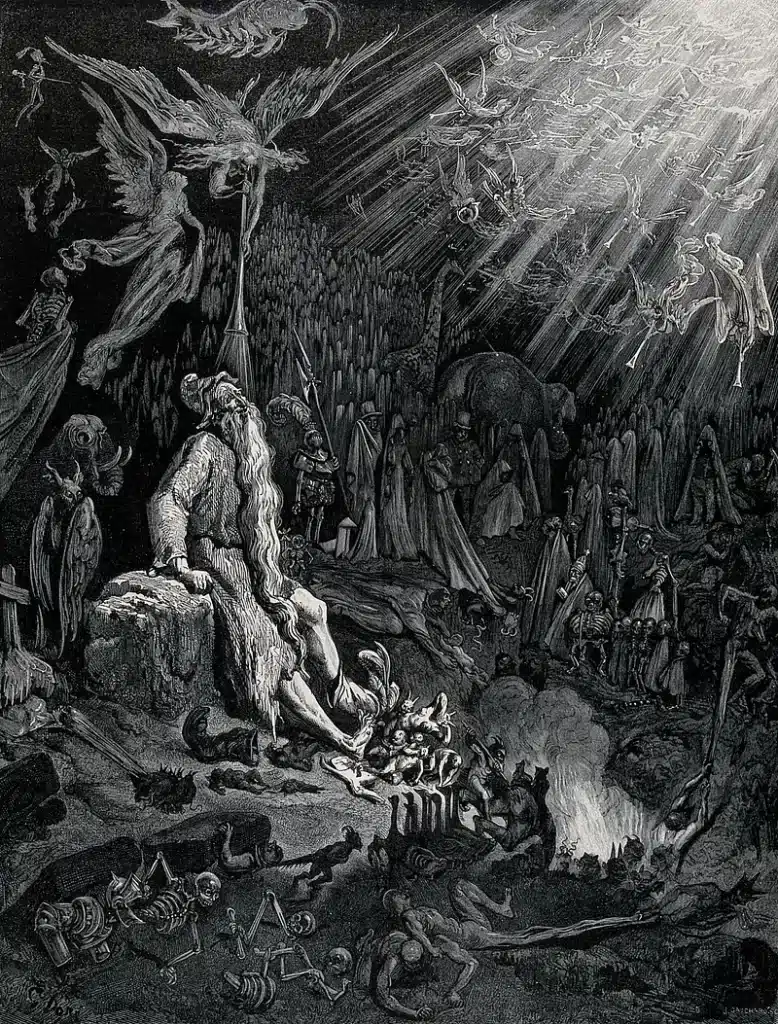
This brings us to the next question. If ours is a God of love, how could he possibly sentence any of us to this horrific, eternal torture? We are saying that ours is a God of love and yet he’s also vindictive and malicious? Leaving aside, say, what murderers or sexual abusers might have coming, do we really believe that if someone lived a saintly life—did nothing but help the needy and the poor, feed those who are starving, or sacrifice their lives to save other lives or to better humanity—but that someone didn’t believe the right beliefs, God would drown them in a lake of fire until the end of time?
Sometimes we just haven’t thought to ask these simple questions. Or we think the matter is too complicated for us to understand—God works in mysterious ways we say. It just doesn’t all make much sense does it? The interesting, funny, and tragic truth of our predicament of belief is that we need not even get so far as to ask these questions if we just do a little research into what Jesus meant by “hell” in the first place. I’ve written several blogs about this subject that can give you the gist, or there are videos here you can watch, but my book covers this subject comprehensively, in a relatively easy read, in just a few chapters, and all of the information you can verify for yourself in the Bible.
What you will find, I promise you, is:
- Jesus never preached about an afterlife hell.
- “Hell” is a translation of the Greek word Gehenna, which is a real valley outside Jerusalem, and not some place existing in another dimension or inside the earth.
- The Gehenna Jesus spoke of is a place one could be thrown into only at the end of the world as we know it on the day of judgment for all humanity.
- Souls are to be destroyed in the fire, not suffer for all eternity.
That much information, when you see it for yourself, will show you that hell has been the great misconception of humanity, which started in ancient times about 1900 years ago.
So what is hell, what is God’s criteria for judgment (what is judgment?), what was Jesus really talking about, and how can one be “saved” from going to hell? These questions are indeed addressed and answered in the Gospels. What Did Jesus Say About Hell? can guide you through those messages. Many people have been transformed through reading this book. You will take an extraordinary journey that will take you through the fear and out the other side where you will be filled with the love and inspiration that the true spiritual path has to offer. Your life may never be the same in the most enthralling and wondrous ways.
To read other blogs, visit the rest of our blog page here.
Separation itself is the punishment!
I have never questioned the fear of hell before your book. I wonder how many others have done the same!
Just found your blog! Love it so far!
It’s about time we start asking questions!! Just because we wonder doesn’t mean we’re losing faith.
AMEN
Can’t wait to read the book! Ordered today, looking forward to answers to all these questions I’ve had since I was in my church choir days.
Thank you very much and please feel free to give feedback. There is another section of the site called Q&A where you can leave general comments on anything.