Answer: First, in my book What the Hell is Hell? I showed what is written in the Bible. That said, I didn’t say there is no hell, I said that there is no hell as we have come to commonly understand it…as we have been commonly understanding it for roughly 1800 years.
“Hell” is an English translation of the Greek word Gehenna. Gehenna is the name of a real place—a valley just outside Jerusalem, which all Jews (Jesus and the disciples included) were well aware of as a reference to it being the most abominable, desecrated place where worshippers of the pagan god Molech would practice child sacrifice by fire. We know this because it is mentioned or alluded to twenty-two times in the Old Testament.
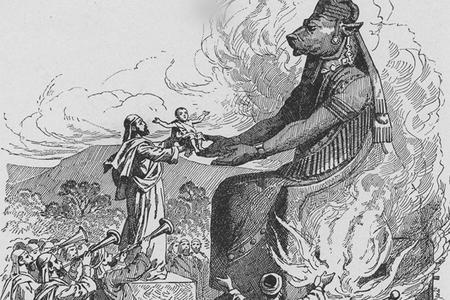
The Old Testament tells us that God has cursed the place and in fact that will be the site where the wicked will be tossed on Judgment Day. See Jeremiah 7:31–34. Isaiah 66:24 also mentions the place and says it will be the site of unquenchable fire, where the worms will never die. In other words, when the wicked are punished, there will be so many bodies that the fire will never run out of fuel and the worms will never run out of food.
This is critically important for Christians because Jesus quotes those exact words in the Gospel of Mark. See Mark 9:47–48. What’s important to understand is that for Jesus, as he tells us in Mark and Matthew (Paul also tells us), the end of the world is soon to come. The Apocalypse is near and that is why he tells people to repent. For Jesus, there was to be an earthly kingdom of heaven on earth. Gehenna also would be on earth, right on the outskirts of the kingdom.
So as far as “hell” is concerned, according to Jesus in the Gospel of Matthew, Mark, and Luke (hell is not mentioned in John) it is a place the wicked go on Judgment Day, not when we die a natural death. So in that sense, yes, I am saying there is no hell as we understand it. All the scriptural support of what I say here is found in my chapter 5.
When the Apocalypse never happened, and the end never came, a major shift in Christian belief occurred. Beginning with Church Fathers in the second century, The concepts of final judgment were transformed not to be an earthly affair happening at the end of the world, but rather to refer to an afterlife heaven, up there, and an afterlife hell, down there. You go to one or the other. And that is the understanding we have held onto to this day. Did Jesus believe in hell? Not our hell, if you go by scripture.